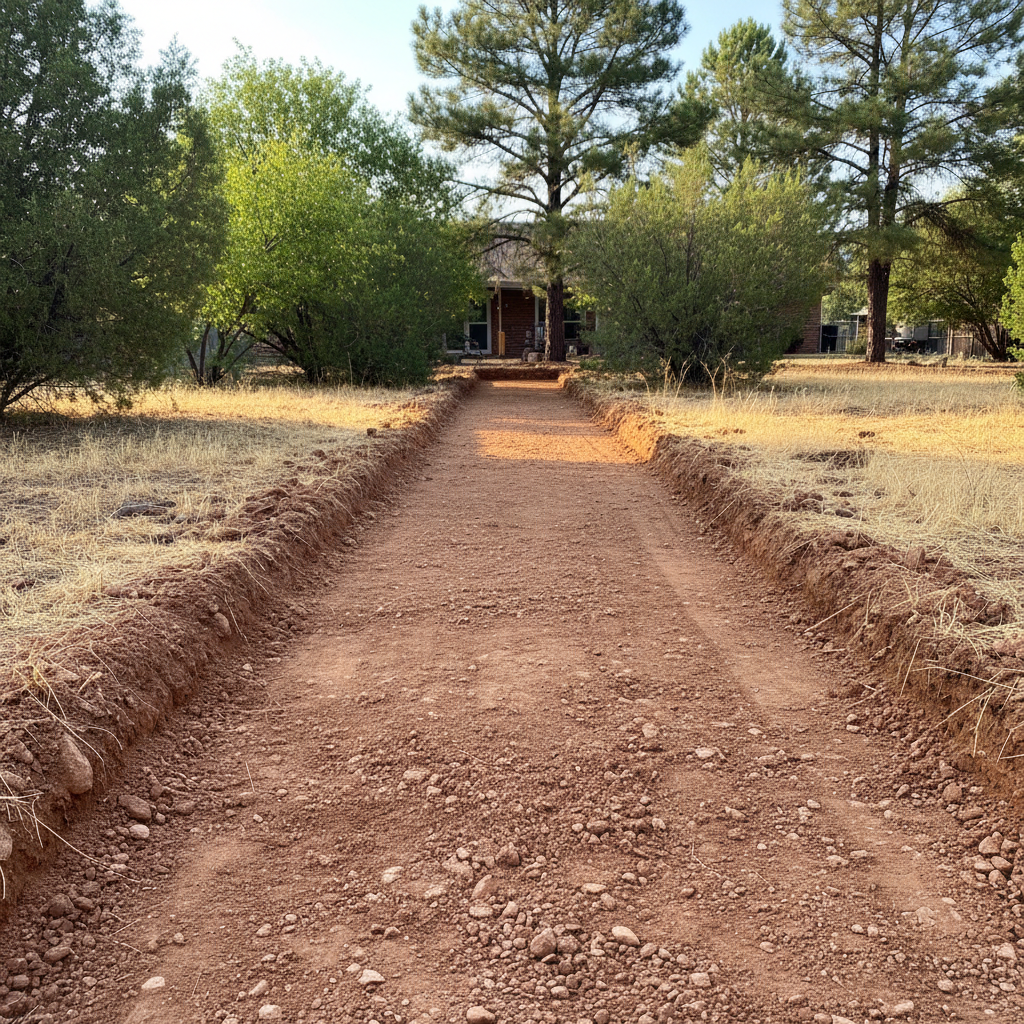
What exactly is trenching and why would I need it?
Trenching is pretty simple: it's just digging a narrow ditch in the ground. You might need it for all sorts of reasons around your Payson property. Most often, people need it for burying utility lines – things like water pipes, sewer lines, electrical conduits, or even gas lines. We also do a ton of trenching for drainage solutions, especially with our monsoon season. If you've got water pooling where it shouldn't, a French drain or a new culvert might need a trench. Sometimes it's for irrigation systems for a new garden or landscaping project, too. Basically, if you need something run underground in a straight line, you're probably looking at a trenching job.
Do I need a permit for trenching in Payson?
Yeah, you almost certainly will. This isn't something you just start digging without checking first, you know? For any work involving utilities – water, sewer, power, gas – you'll need permits from the Town of Payson and often from the specific utility companies themselves. Even for drainage, if it's significant or impacts a public right-of-way, you'll need to get it approved. The biggest reason for permits is safety and making sure the work meets code. You definitely don't want to hit an existing line, and you certainly don't want to install something that's not up to snuff. Always, always check with the Town's building department before any dirt moves. A good contractor, like us at Coastal Excavating Solutions, will help you through that permit process.
How deep and wide does a trench typically need to be?
That really depends on what you're putting in it. For water lines, especially here in Payson where we get freezing temperatures, you're looking at a minimum depth to get below the frost line, usually 18-24 inches, sometimes more depending on the specific code and elevation. Sewer lines need a certain slope for gravity to do its job, so they can get pretty deep, particularly if you're connecting to a main line far away. Electrical conduits might not need to be quite as deep, but again, local code dictates minimums. Width-wise, we try to keep it as narrow as possible to minimize disruption and backfill, but it needs to be wide enough for the pipe or conduit, plus room for proper bedding material and compaction. Generally, we're talking 6 to 12 inches wide for most residential utility trenches, but it varies.
What about hitting existing utility lines? How do you avoid that?
That's probably the biggest concern on any trenching job, and it's a serious one. Before we even think about putting a shovel in the ground, we call 811 – that's the national Call Before You Dig number. They'll notify all the utility companies in the area, and those companies will come out and mark where their lines are buried. It's a free service and it's absolutely critical. Even with those markings, we always dig carefully, sometimes even hand-digging around marked areas just to confirm. You'd be surprised how often lines aren't exactly where the flags are. Hitting a gas line or a high-voltage electrical line isn't just an inconvenience; it can be deadly. Never skip calling 811.
The soil on my property is really rocky. Does that make a difference?
Oh, you're in Payson, so yeah, it makes a huge difference! We've got some notoriously rocky soil around here, especially up on the higher elevations or in areas like Christopher Creek. Digging through solid rock isn't like digging through soft dirt. It takes specialized equipment, like rock trenchers or hydraulic hammers on excavators. It's slower, harder work, and honestly, it costs more. The good news is we're used to it. We know how to tackle that kind of ground efficiently and safely. Just be prepared that if your property is mostly rock, the job will take longer and the equipment needed will be heavier duty than if you were digging in, say, sandy loam.
How much does trenching cost?
That's the million-dollar question, and the honest answer is: it varies a lot. There's no flat rate. It depends on the length of the trench, the depth, the width, and crucially, what kind of material we're digging through. As I just mentioned, rock costs more than dirt. Accessibility is another factor – can we get our equipment in easily, or is it a tight spot that needs smaller machines or more hand digging? What's going in the trench? Are we just digging, or are we also installing pipes, backfilling, and compacting? Permits, utility locating, and site restoration (like putting your landscaping back) also factor in. The best way to get an accurate cost is to have us come out, take a look at your specific project, and give you a detailed estimate. We'll break down exactly what you're paying for.
What happens after the trench is dug and the pipes are laid?
Once the utility lines or pipes are in place and inspected (if required by code), the next step is backfilling. This means putting the dirt back into the trench. We do this carefully, often in layers, compacting the soil as we go. Proper compaction is key to prevent settling later on, which can cause dips in your yard or even damage to the installed lines. We'll use the excavated material if it's suitable, or bring in new fill if needed. After backfilling, we'll grade the area to match the surrounding landscape, ensuring proper drainage away from your home. We aim to leave your property looking as good as, or better than, when we started, with minimal evidence that we were even there, other than your new, functioning utility or drainage system.